
More Joy Ministries
Full Bible Study
ABIMELECH: THE MAN WHO WANTED A CROWN GOD NEVER GAVE HIM
Abimelech is one of those Bible names that can get confusing because more than one man carries the name. In Genesis, Abimelech is the king of Gerar who gets pulled into Abraham’s mess when Abraham says Sarah is his sister. But in Judges, Abimelech is the son of Gideon, and his story is much darker.
The name Abimelech comes from the Hebrew:
אֲבִימֶלֶךְ — ʾAvimelekh
It means “my father is king” or “father of a king.”
אָב — av means father.
מֶלֶךְ — melekh means king.
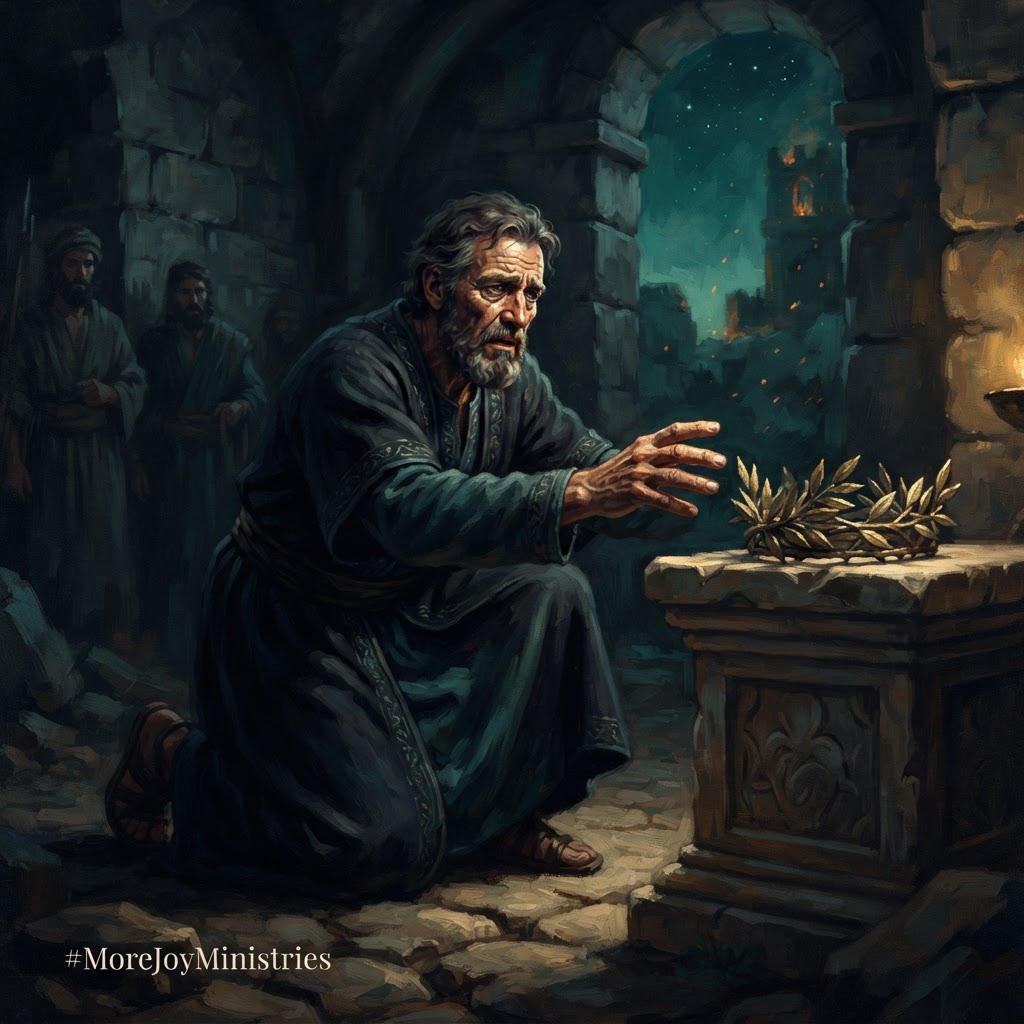
The name carries royal language, and in Judges 9 it becomes loaded. Abimelech had a kingly name before Israel officially had kings, but he did not have a kingly heart. He wanted a crown God never gave him.
After Gideon died, Abimelech went to Shechem, to his mother’s family, and made a political pitch. He asked them whether they would rather be ruled by all seventy sons of Gideon or by one man who was their own flesh and blood.
Judges 9:2 says:
“Speak, I pray you, in the ears of all the men of Shechem, Whether is better for you, either that all the sons of Jerubbaal, which are threescore and ten persons, reign over you, or that one reign over you? remember also that I am your bone and your flesh.”
That is the language of a man working the room.
He is not seeking the LORD. He is not waiting on God. He is not being raised up like Moses or Joshua. He is using family loyalty, convenience, and political pressure to get what he wants.
Then the men of Shechem gave him money from the house of Baal-berith, and Abimelech used it to hire worthless men to follow him.
Judges 9:4 says:
“And they gave him threescore and ten pieces of silver out of the house of Baal-berith, wherewith Abimelech hired vain and light persons, which followed him.”
That tells you the foundation of his kingdom.
Pagan money. Cheap loyalty. Corrupt ambition.
Then Abimelech went to his father’s house and murdered his brothers on one stone.
Seventy sons of Gideon.
One stone.
One survivor.
Jotham escaped.
Abimelech did not rise by calling. He rose by slaughter.
That is what ambition looks like when it is not submitted to God. It does not build. It removes whoever stands in the way.
Then the men of Shechem made Abimelech king.
But Jotham stood on Mount Gerizim and spoke a parable over them. He said the trees went out to anoint a king over themselves. They asked the olive tree, the fig tree, and the vine, but each one refused to leave its God-given fruitfulness just to wave over the trees.
Then they asked the bramble.
The thornbush.
And the bramble accepted.
That is the picture.
Abimelech was not the olive tree. He was not the fig tree. He was not the vine. He was the bramble.
A thornbush.
A worthless, scraping, dangerous thing that offers shade it cannot really provide and threatens fire if it is not honored.
Judges 9:15 says:
“And the bramble said unto the trees, If in truth ye anoint me king over you, then come and put your trust in my shadow…”
Who trusts in the shadow of a thornbush?
A bramble cannot shelter a nation. It can only scratch, choke, and burn.
That is Abimelech.
Jotham warned them that if they had acted wickedly, fire would come out from Abimelech and devour Shechem, and fire would come out from Shechem and devour Abimelech.
That is exactly what happened.
The alliance built on wickedness eventually turned on itself.
Shechem backed Abimelech when it was useful. Abimelech used Shechem when it was useful. But when selfish people join together for selfish reasons, the friendship only lasts until the benefits dry up.
Judges 9:23 says:
“Then God sent an evil spirit between Abimelech and the men of Shechem; and the men of Shechem dealt treacherously with Abimelech.”
God let the rotten alliance rot from the inside.
The same people who helped put Abimelech in power became part of his judgment.
Eventually Abimelech attacked Shechem and burned the tower of Shechem with fire. Then he went after Thebez. But there, a woman dropped a piece of millstone on his head and broke his skull.
Abimelech, the man who killed his brothers on one stone, was judged by a stone.
Bible irony always gets me.
Even while dying, he told his armor-bearer to kill him so people would not say a woman killed him.
Judges 9:54 says:
“Draw thy sword, and slay me, that men say not of me, A woman slew him.”
He was dying under judgment, and he was still worried about his image.
Then Scripture gives the verdict.
Judges 9:56 says:
“Thus God rendered the wickedness of Abimelech, which he did unto his father, in slaying his seventy brethren.”
God rendered it.
That is the key to the whole account.
Abimelech looked like he got away with it for a while. He had power. He had followers. He had a title. He had men afraid of him.
But he did not have God’s approval.
And eventually the bill came due.
Abimelech is a warning about self-made crowns.
A man can grab a title and still not be called by God. He can gather followers and still be empty. He can use family connections, money, pressure, fear, and violence to force doors open, but forced doors are not the same as God-opened doors.
Abimelech wanted kingship without righteousness.
Authority without submission.
Power without calling.
A crown without God.
And it destroyed him.
The Bible does not only warn us about weak men. It also warns us about ambitious men with no fear of God.
Abimelech had the name of royalty, but not the heart for righteous rule.
His name said, “my father is king.”
His life said, “I will be king.”
That is the danger.
When a man refuses to bow to God, he will eventually try to make others bow to him.
And if the only way he can lead is by manipulation, fear, and force, he is not a shepherd.
He is a bramble.
#MoreJoyMinistries




