More Joy Ministries
Full Bible Study
THE NEPHILIM AND THE SONS OF GOD:
Genesis 6 is one of the strangest passages in the Bible.
It is only a few verses, but it opens a window into how corrupt the world had become before the flood.
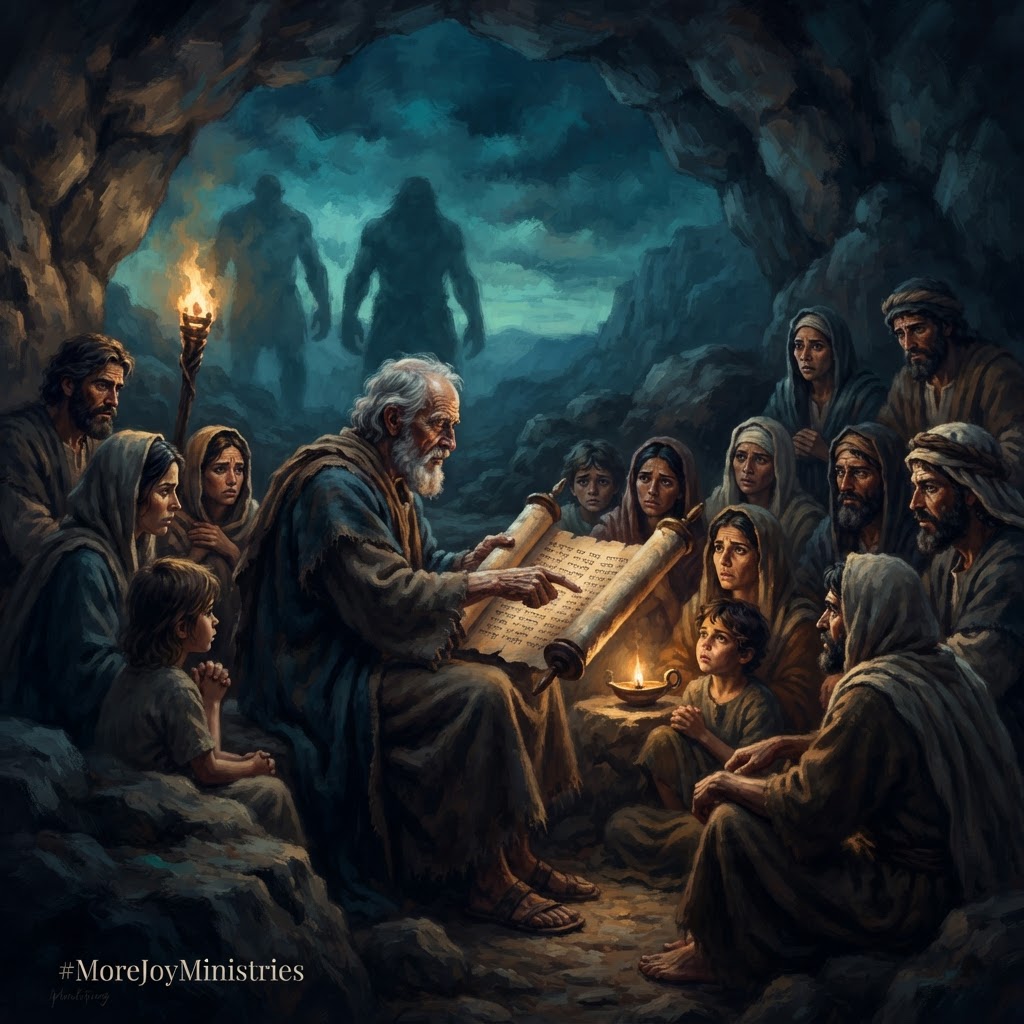
Genesis 6:1–4 says the “sons of God” saw the daughters of men, took wives, and had children by them. Those children were connected with the Nephilim.
The phrase “sons of God” in Hebrew is:
בְּנֵי הָאֱלֹהִים
bene ha-Elohim
In places like Job 1:6, Job 2:1, and Job 38:7, that kind of language points to heavenly beings. Not ordinary men. Not just “godly sons of Seth” marrying “ungodly daughters of Cain.”
That view exists, but I do not think it handles the wording very well.
Genesis is showing us a forbidden crossing of boundaries.
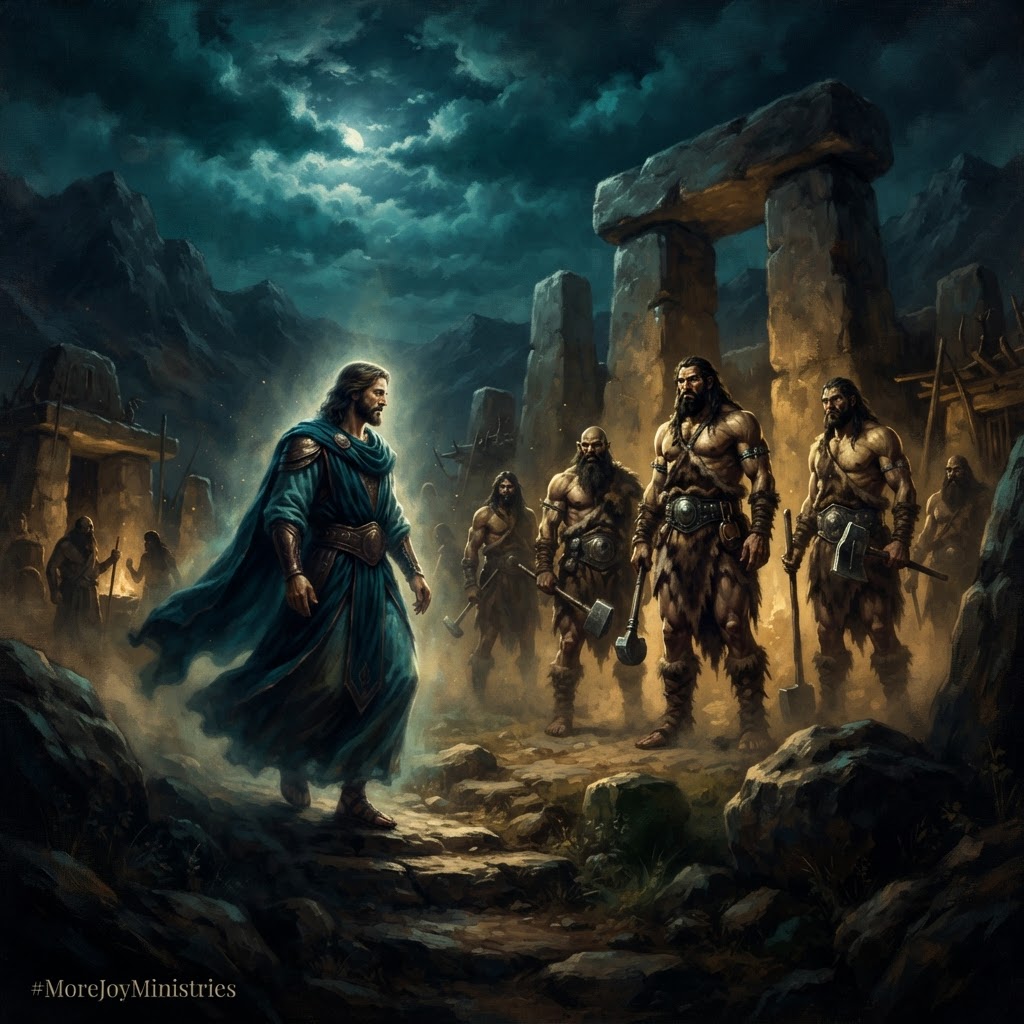
Heavenly beings saw human women, took what they wanted, and the offspring were called Nephilim.
The Hebrew word is:
נְפִילִים
Nephilim
It is commonly tied to the idea of “fallen ones,” though there is debate over the exact root. Genesis calls them “mighty men which were of old, men of renown.”
That word “mighty” is:
גִּבֹּרִים
gibborim
It means mighty ones, warriors, strong men, champions.
The word “renown” is tied to:
שֵׁם
shem
A name.
Reputation.
Fame.
That is important because Genesis keeps showing the same battle over the “name.”
The ancient world was full of stories about gods mixing with humans and producing heroes, kings, warriors, and monster slayers. Greece had Hercules, Achilles, and Perseus. Mesopotamia had Gilgamesh. Other nations had their own versions.
The pagan world looked at those figures and called them heroes.
Genesis does not.
Genesis puts them in the world God judged.
Right after the Nephilim are mentioned, Genesis 6:5 says:
“And GOD saw that the wickedness of man was great in the earth…”
So whatever else we say about the Nephilim, we should not turn them into superheroes.
They were men of renown, but renown is not righteousness.
Fame is not holiness.
Strength is not God’s approval.
You see the same spirit again at Babel.
Genesis 11:4 says:
“Let us make us a name…”
The word for “name” is again:
שֵׁם
shem
That is fallen man in one sentence.
Build upward.
Grab glory.
Be remembered.
Reach heaven on your own terms.
The Nephilim were men of “name.”
Babel wanted to make a “name.”
Same disease.
Pride.
Then Genesis flips the whole thing.
After Babel, God calls Abram.
Not a giant.
Not a demigod.
Not a mighty warrior with some legendary bloodline.
A childless man with no empire and no glory of his own.
And God says:
“I will bless thee, and make thy name great…”
Genesis 12:2
Again, the word is:
שֵׁם
shem
There is the contrast.
Babel says, “We will make our name great.”
God says to Abraham, “I will make thy name great.”
One grabs.
The other receives.
One builds in pride.
The other walks by faith.
The Nephilim show the old world chasing corrupted power and fame.
Abraham shows a man living by promise because God called him.
Now the Greek matters too.
When the Hebrew Scriptures were translated into Greek in the Septuagint, the translators rendered Nephilim as:
γίγαντες
gigantes
Giants.
That word carried the idea of huge, violent, legendary beings in the Greek world. So even in the Greek tradition, Genesis 6 was not being treated like a normal marriage passage between ordinary men and women.
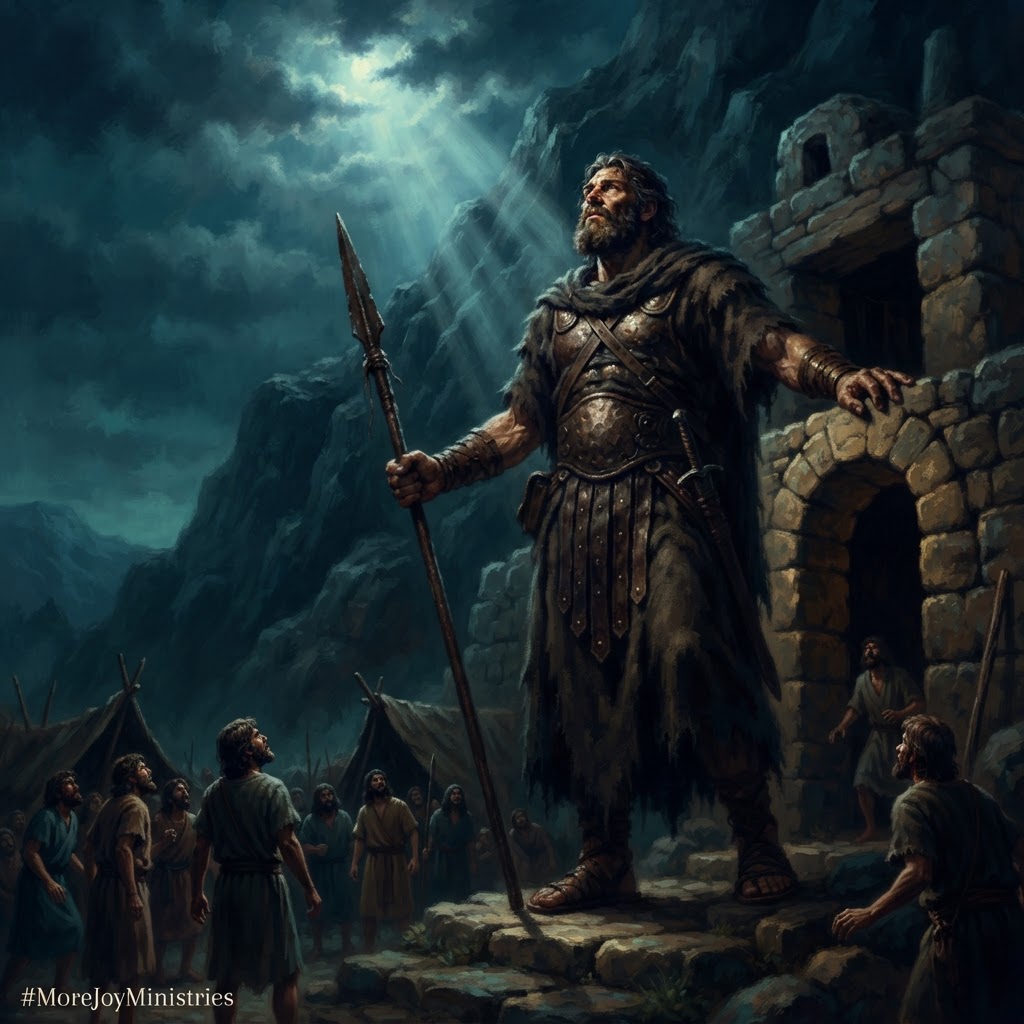
The Nephilim are mentioned again in Numbers 13:33 when the spies say they saw giants in the land, the sons of Anak, which came from the giants.
Israel saw giants and panicked.
God saw enemies that could fall.
The Bible never tells God’s people to worship giants, envy giants, or fear giants.
Goliath had size.
David had the name of the LORD.
And that was enough.
So Genesis 6 is not there to feed weird speculation or turn Bible study into fantasy.
It's there to show what happens when God’s order is violated, when power is worshiped, when fame becomes the goal, and when creation rebels against the Creator.
The pagan world called them heroes.
Genesis calls them fallen.
#MoreJoyMinistries