More Joy Ministries
Full Bible Study
Several men named Abimelech appear in the Bible. Some translations spell it Abimelek, but the meaning remains father of the king regardless of the spelling.
Many scholars view this as a royal title among the Philistines, similar to how the Egyptians used the title Pharaoh.
Various Philistine kings were called Abimelech. Genesis 20:2 identifies the king of Gerar who took Sarah as Abimelech, and Genesis 26:1 applies the same name to the king of Gerar during Isaac's time.
The title of Psalm 34 mentions an Abimelech, though 1 Samuel 21:11 identifies that specific king of Gath as Achish.
Another figure appears in 1 Chronicles 18:16 as a son of the high priest Abiathar. Translations vary between Abimelech and Ahimelech, but this man served as a priest under King David.
The most prominent Abimelech was the murderous son of Gideon found in the book of Judges. Gideon had seventy sons, but his concubine in Shechem bore him Abimelech.
Judges 8:30 through 31 records his origins:
Gideon had seventy sons of his own, for he had many wives. His concubine, who lived in Shechem, also bore him a son, whom he named Abimelek.
Abimelech sought power by slaughtering his brothers to remove all opposition. Judges 9:5 states he killed them all except for the youngest, Jotham.
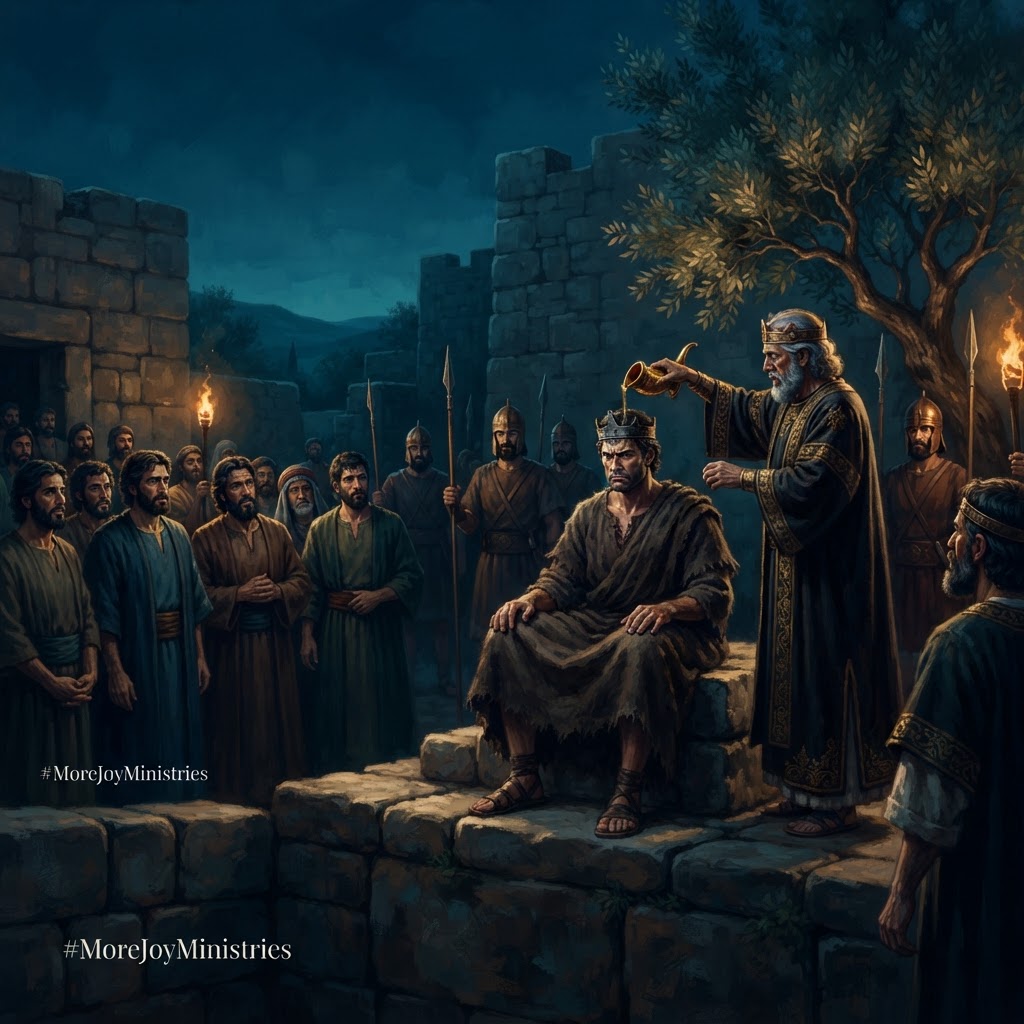
He then established himself as king over Shechem.
Civil war eventually tore his kingdom apart. During a battle at Thebez, Abimelech attempted to burn a tower where the local leaders were hiding.
A woman dropped an upper millstone on his head, crushing his skull.
Judges 9:53 through 55 describes his end:
A woman dropped an upper millstone on Abimelech’s head and cracked his skull. Hurriedly he called to his armor-bearer, Draw your sword and kill me, so that they can’t say, A woman killed him.
So his servant ran him through, and he died. When the Israelites saw that Abimelek was dead, they went home.
Abimelech serves as a warning about the abuse of power. He led through violence and selfishness rather than service to God.
His life stands in sharp contrast to the leadership of his father, Gideon.
Years later, Joab referenced this death when arranging the murder of Uriah. 2 Samuel 11:21 asks:
Who killed Abimelek son of Jerub-Besheth? Didn’t a woman drop an upper millstone on him from the wall, so that he died in Thebez?
This reference served as a reminder that leaders who prioritize personal gain over God eventually suffer for their arrogance.
#MoreJoyMinistries