
More Joy Ministries
Full Bible Study
The Feast of Tabernacles:
(Leviticus 23:33-44 NKJV)
"Then the Lord spoke to Moses, saying, "Speak to the children of Israel, saying: 'The fifteenth day of this seventh month shall be the Feast of Tabernacles for seven days to the Lord. On the first day there shall be a holy convocation. You shall do no customary work on it. For seven days you shall offer an offering made by fire to the Lord. On the eighth day you shall have a holy convocation, and you shall offer an offering made by fire to the Lord. It is a sacred assembly, and you shall do no customary work on it."
"These are the feasts of the Lord which you shall proclaim to be holy convocations, to offer an offering made by fire to the Lord, a burnt offering and a grain offering, a sacrifice and drink offerings, everything on its day-- besides the Sabbaths of the Lord, besides your gifts, besides all your vows, and besides all your freewill offerings which you give to the Lord 'Also on the fifteenth day of the seventh month, when you have gathered in the fruit of the land, you shall keep the feast of the Lord for seven days; on the first day there shall be a sabbath-rest, and on the eighth day a sabbath-rest."
"And you shall take for yourselves on the first day the fruit of beautiful trees, branches of palm trees, the boughs of leafy trees, and willows of the brook; and you shall rejoice before the Lord your God for seven days. You shall keep it as a feast to the Lord for seven days in the year. It shall be a statute forever in your generations. You shall celebrate it in the seventh month. You shall dwell in booths for seven days. All who are native Israelites shall dwell in booths, that your generations may know that I made the children of Israel dwell in booths when I brought them out of the land of Egypt: I am the Lord your God.' " So Moses declared to the children of Israel the feasts of the Lord".
The significance of the Feast of Tabernacles can be found in several areas of the Bible, particularly in Leviticus 23, Numbers 29:12-38, and Deuteronomy 16:13-15. Here's a summary of its meanings and purposes:
Agricultural Significance: The festival occurs at the time of the year when the harvest is gathered, marking the end of the agricultural year. It is a time of thanksgiving for the land's bounty, a harvest celebration.
Historical Remembrance: The Feast of Tabernacles commemorates the 40 years of wandering in the desert by the Israelites, during which they lived in temporary shelters (sukkot). It serves as a reminder of when God provided for the Israelites in the wilderness after the Exodus from Egypt.
A Time of Joy and Unity: It is described as the "season of our joy" (Zeman Simchateinu). The festival encourages communal participation, joyous celebration, and unity among the people as they gather in Jerusalem to celebrate, which was particularly emphasized during the time of the Temple.
Spiritual Significance: It also has deep spiritual meanings, symbolizing God's sheltering presence and the belief in divine protection. The temporary nature of the sukkah (the hut or booth) is a reminder of the transience of life and the importance of relying on God.
Eschatological Significance: In prophetic literature, such as Zechariah 14:16-19, the Feast of Tabernacles is envisioned as a time when all nations will come to Jerusalem to worship the Lord, signifying a period of peace and universal recognition of God.
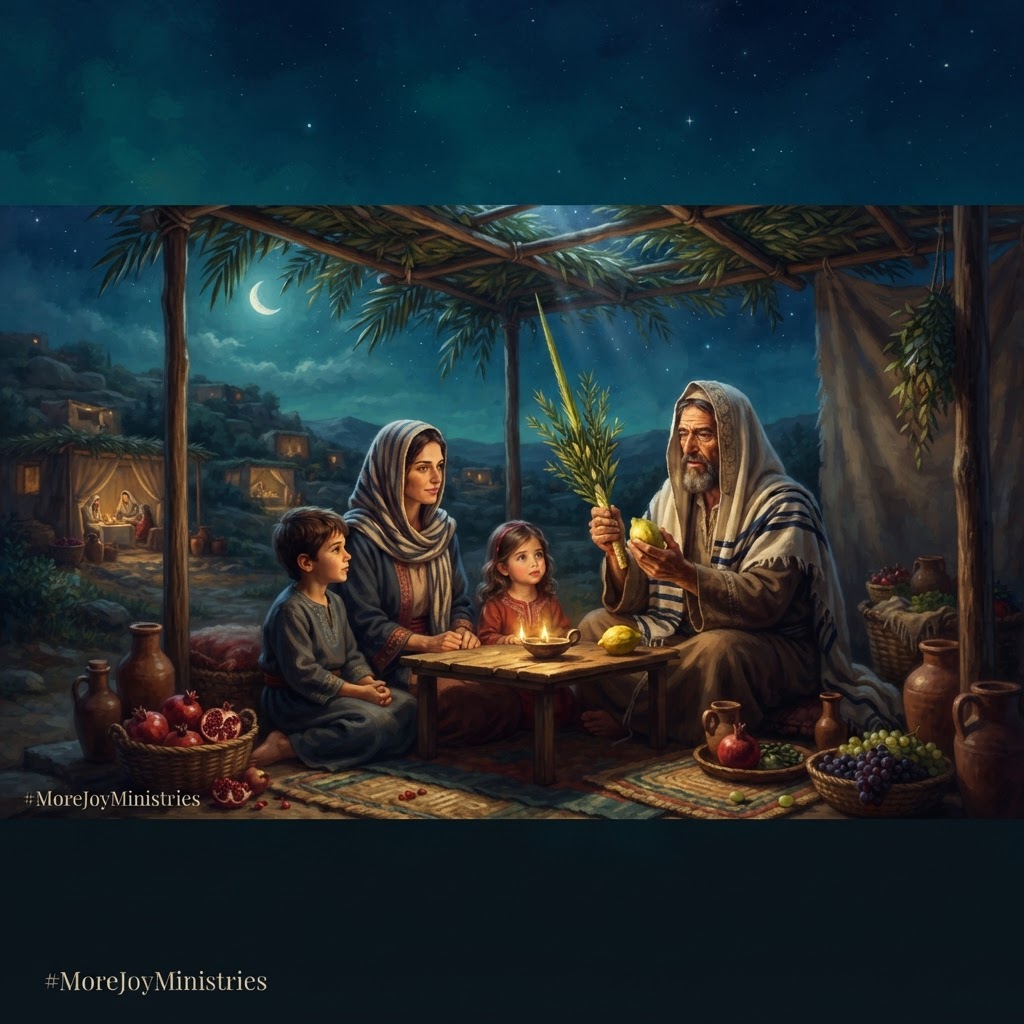
Throughout its observance, participants build and dwell in sukkot (plural for sukkah) to fulfill the commandment to "dwell in booths for seven days." The sukkah is deliberately constructed to be temporary and somewhat exposed to the elements, reminding participants of the fragility of life and the need for faith in God's provision.
In addition to its original agricultural and historical significances, the Feast of Tabernacles has evolved to acquire deeper theological and messianic meanings within both Jewish tradition and Christian eschatology, where it is sometimes associated with the return of Christ and the establishment of His kingdom.
Historically, the Feast of Tabernacles has been a backdrop for pivotal biblical events. Solomon chose this time to dedicate the First Temple, an act of immense spiritual and national significance for Israel (1 Kings 8:2). Similarly, during the post-exilic period, leaders like Joshua, Zerubbabel, and Ezra played crucial roles during Sukkot. Under their leadership, the Israelites celebrated the feast with renewed dedication, and Ezra's public reading of the Law sparked a great revival (Ezra 3; Nehemiah 8). Notably, Jesus Christ utilized the occasion of Sukkot to teach profound truths about living water and belief (John 7:37-39), embedding the festival with additional layers of spiritual meaning.
Beyond its historical and ritual significance, Sukkot holds profound theological implications, especially in the context of Christian eschatology. The festival is seen as a foreshadowing of Christ's second coming and His eternal reign. Some theologians also suggest that Jesus' birth occurred during Sukkot, given the shepherds' presence in the fields—a detail aligning with the festival's agricultural context. The Gospel of John subtly hints at this connection by using the term "tabernacle" to describe Christ's incarnation (John 1:14), suggesting that Jesus' earthly ministry symbolically began with His own "tabernacling" among humans.
The Feast of Tabernacles is a complex celebration with strong ties to Jewish heritage and significant links to Christian beliefs. This observance honors historical events, conveys profound spiritual meanings, and looks forward to the anticipated arrival of the Messiah. Consequently, Sukkot serves as a compelling reminder of God's care, safeguarding, and commitment to be present with His people. Through the perspective of Sukkot, believers are encouraged to contemplate the past, rejoice in the present, and eagerly anticipate the future kingdom of God.



