More Joy Ministries
Full Bible Study
Some details in Scripture are easier to hear in Hebrew than to see in English.
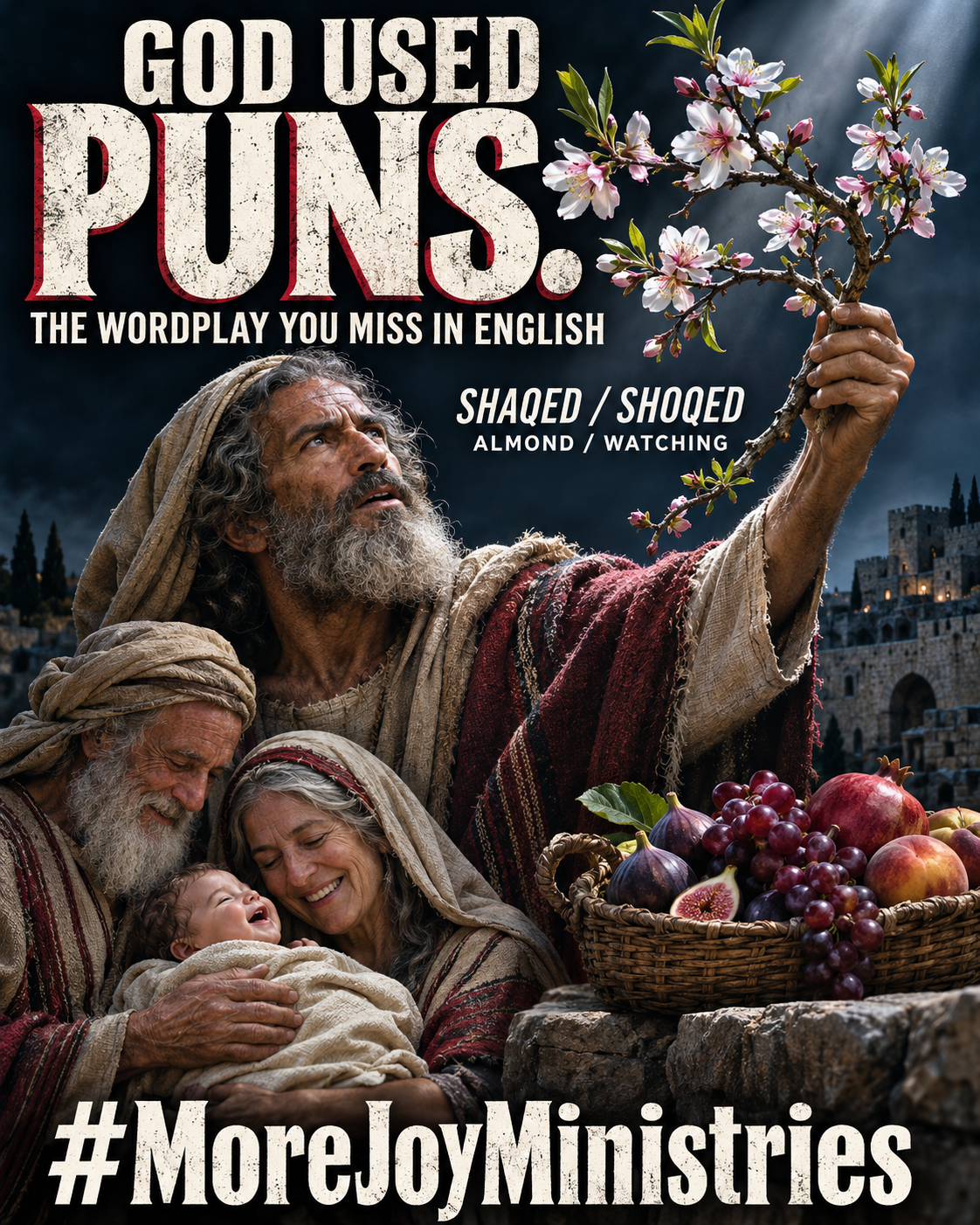
God showed Jeremiah an almond branch, then connected what he saw with a promise about His word.
“Moreover the word of the LORD came unto me, saying, Jeremiah, what seest thou? And I said, I see a rod of an almond tree.”
Jeremiah 1:11 KJV.
“Then said the LORD unto me, Thou hast well seen: for I will hasten my word to perform it.”
Jeremiah 1:12 KJV.
Almond is shaqed. Watching is shoqed. The words sound alike. The almond branch becomes a reminder that God is watching over His word to carry it out.
Amos receives another word picture.
“Thus hath the Lord GOD shewed unto me: and behold a basket of summer fruit.”
Amos 8:1 KJV.
Summer fruit is qayits. End is qets. When Amos identifies the ripe fruit, God announces that the end has come upon Israel. Amos 8:2. The harvest image carries a warning about a people ripe for judgment.
Then there’s Isaac. His Hebrew name, Yitzchaq, is connected with laughter. Abraham laughed when God promised a son through Sarah. Sarah laughed too. Genesis 17:17; 18:12.
When the promised son arrived, Sarah said this.
“And Sarah said, God hath made me to laugh, so that all that hear will laugh with me.”
Genesis 21:6 KJV.
A name carried the memory of their laughter and the joy of God keeping His promise.
God’s choice of words can carry a lesson you miss in translation. Sometimes a branch, a basket, or a baby’s name says more than the English reader first hears.
#MoreJoyMinistries