More Joy Ministries
Full Bible Study
Before you assume Israel will always have an ally to bail it out, look at how specific Scripture gets about the nations coming against it.
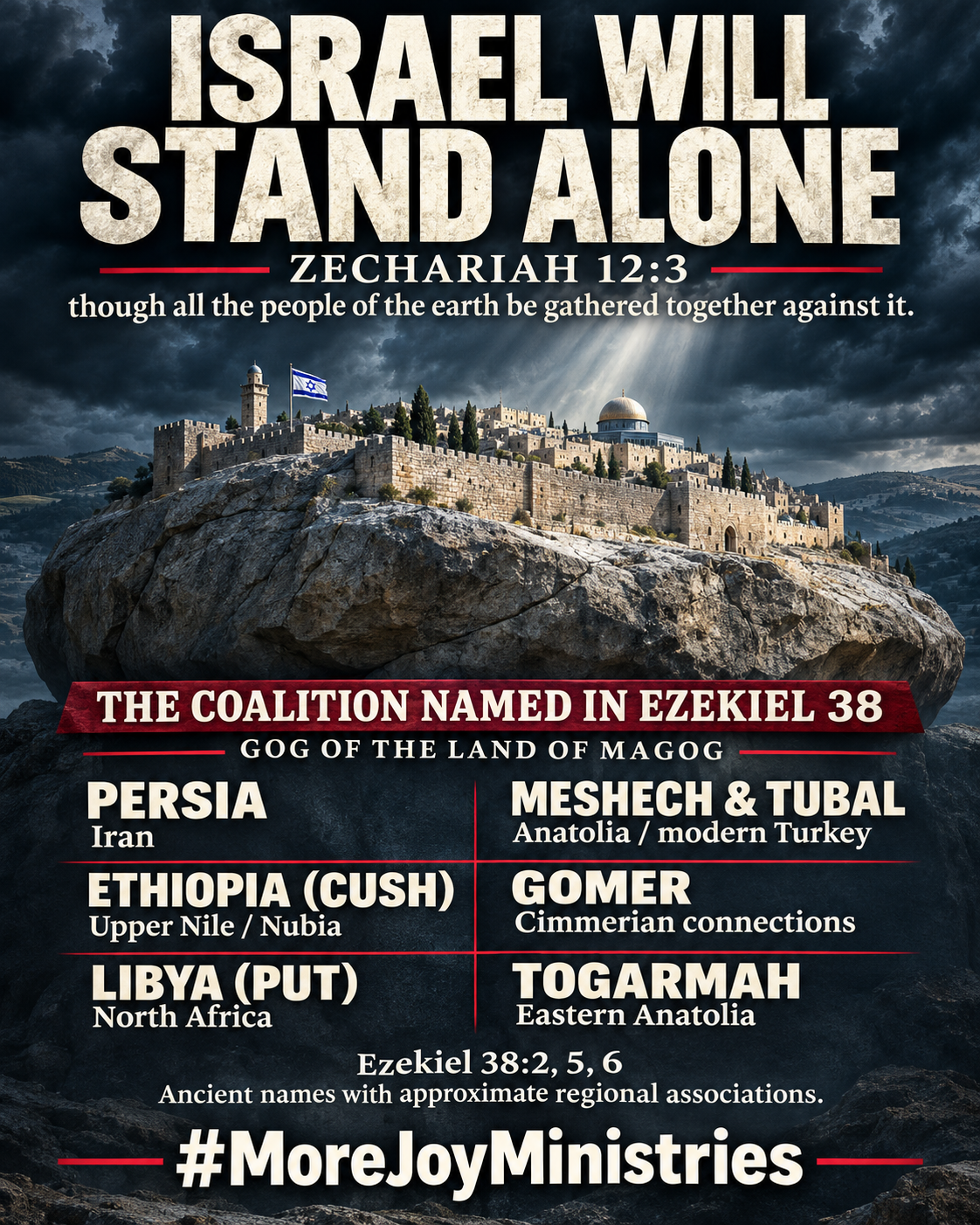
“And in that day will I make Jerusalem a burdensome stone for all people: all that burden themselves with it shall be cut in pieces, though all the people of the earth be gathered together against it.”
Zechariah 12:3 KJV.
America doesn’t get an exemption written into “all the people of the earth.” We shouldn’t build our understanding of prophecy around whoever happens to be sitting in the White House.
Now open Ezekiel 38. God names Gog of the land of Magog, Meshech, Tubal, Persia, Ethiopia, Libya, Gomer, and the house of Togarmah. This is an international coalition coming against Israel. Ezekiel 38:2 through 6.
Persia brings Iran into the discussion. Cush, translated “Ethiopia” in the KJV, points to the ancient Upper Nile region, particularly Nubia in what’s now Sudan. Put, translated “Libya,” brings North Africa into the account.
Meshech and Tubal are associated with Anatolia, in modern Turkey. Gomer is commonly connected with the Cimmerians, and Togarmah with eastern Anatolia and nearby regions. That’s why Turkey comes up in this study. These ancient peoples and territories don’t fit neatly inside every modern border, but the geographical reach of the coalition is clear.
Then notice what God calls Israel in Ezekiel 38:16: “my people of Israel” and “my land.”
The nations have their reasons for coming. God tells us His reason for intervening.
“Thus will I magnify myself, and sanctify myself; and I will be known in the eyes of many nations, and they shall know that I am the LORD.”
Ezekiel 38:23 KJV. God puts His own name behind the outcome.
Ezekiel gives us that named coalition. Zechariah takes us to the nations gathered against Jerusalem and the Lord returning to fight them. Ezekiel’s invasion shouldn’t be assigned a date relative to the rapture that the passage doesn’t give us.
Now follow the sequence through Daniel’s final week.
Jesus takes His Church home first, bringing the Church age, the age of grace, to a close. We’re caught up to meet Him in the air. God then resumes His dealings with Israel through Daniel’s seventieth week, the final seven years before Christ returns. First Thessalonians 4:16 and 17 describes the catching away. Daniel 9:24 identifies the people and city those seventy weeks concern: Israel and Jerusalem.
Those final seven years are the tribulation, the time of Jacob’s trouble. Jeremiah gives us both the warning and the promise:
“...it is even the time of Jacob’s trouble; but he shall be saved out of it.”
Jeremiah 30:7 KJV.
Daniel 9:27 describes the confirmation of a covenant for that final week. Halfway through, the sacrifices stop and the sanctuary is desecrated. Jesus tells those in Judaea what to do when they see the abomination of desolation: flee into the mountains. They’re warned against going back for belongings or even their clothes. There won’t be time to pack up the house and figure things out tomorrow. Matthew 24:15 through 21.
Revelation 12 shows Israel pictured as the woman pursued by the dragon. She escapes into the wilderness to “a place prepared of God,” where she’s sustained for 1,260 days. Alongside Daniel’s midpoint and Jesus’ warning, that places her protection in the final three and a half years. Satan pursues her while God preserves a remnant. Revelation 12:6 and 14.
Petra, in modern Jordan, may be that refuge. That identification connects the shelter for outcasts in Isaiah 16 with the territories escaping the ruler’s hand in Daniel 11:41. The prepared refuge is explicit; Petra is the proposed location.
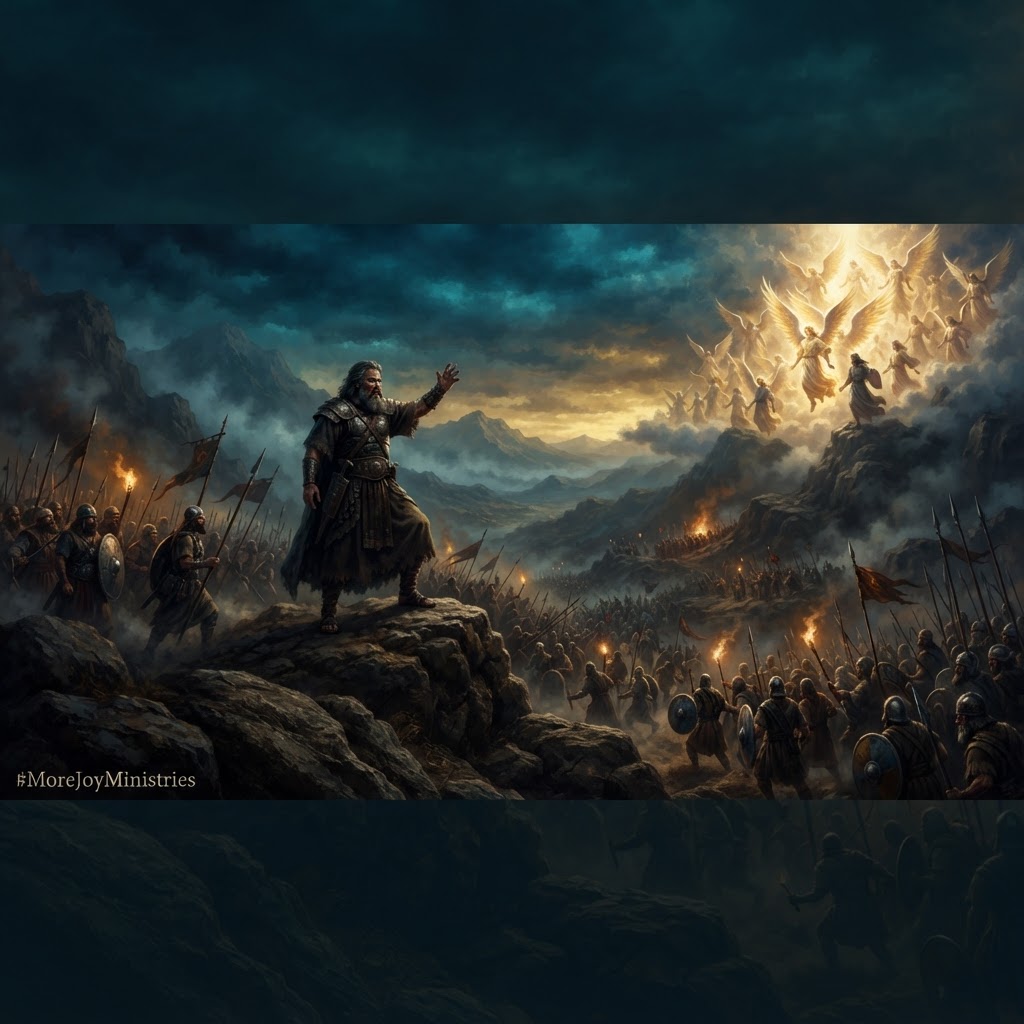
Follow it through to Zechariah 14. The nations gather against Jerusalem, the LORD goes forth to fight them, and His feet stand on the Mount of Olives.
Zechariah 12:10 says they’ll look upon Him whom they pierced and mourn. The Messiah they rejected comes back to deliver them.
Israel’s future doesn’t depend on America keeping its promises. It depends on God keeping His.
#MoreJoyMinistries