More Joy Ministries
Full Bible Study
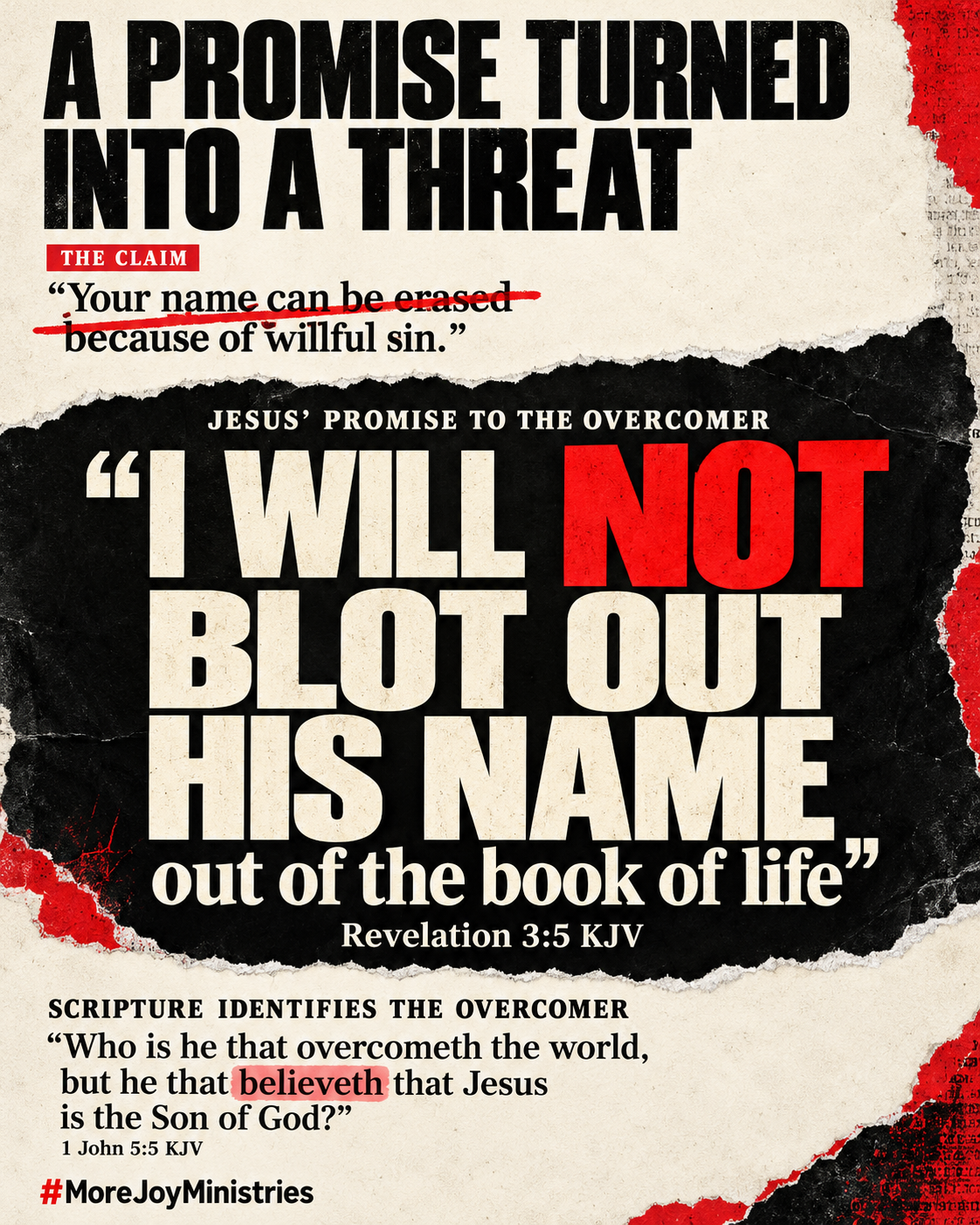
YOU CAN’T LOSE YOUR SALVATION. YOU CAN FAKE IT.
There is a massive difference between losing your salvation and never being saved in the first place. Scripture warns repeatedly about false converts and false professions. What it does not teach is that Jesus gives somebody eternal life, seals them with the Holy Spirit, and then takes it all back when they fail.
Jesus said, “I give unto them eternal life; and they shall never perish, neither shall any man pluck them out of my hand.”
John 10:28 KJV
That is about as plain as it gets. Eternal life is not probationary life. If it can expire, it was never eternal.
The problem with believing you can lose your salvation is where it puts the responsibility for keeping it. If Jesus saves you, but your continued performance determines whether you remain saved, then ultimately you are responsible for finishing what Jesus started.
That is not the Gospel.
“For by grace are ye saved through faith; and that not of yourselves: it is the gift of God: Not of works, lest any man should boast.”
Ephesians 2:8–9 KJV
Jesus said, “It is finished” in John 19:30. He did not make the down payment and leave the rest of the bill with us. Our salvation was purchased by His blood, and Scripture says the believer is “sealed with that holy Spirit of promise” until the redemption of the purchased possession.
Ephesians 1:13–14 KJV
Before somebody runs into the comments saying once saved, always saved is an excuse to sin, learn the difference between salvation and sanctification.
Salvation does not give Christians permission to live however they want. A saved man can rebel against God, wreck his testimony, destroy relationships, lose rewards, suffer the consequences of his sin, and experience the chastening of his Father. None of that means he became unborn again.
“There is therefore now no condemnation to them which are in Christ Jesus…”
Romans 8:1 KJV
Paul goes even further in Romans 8:38–39. Neither death, life, angels, principalities, powers, things present, things to come, height, depth, nor any other creature can separate us from the love of God which is in Christ Jesus our Lord.
So what about somebody who looks saved and eventually walks away?
Look at Judas.
Judas walked with Jesus. He heard the teaching firsthand. He witnessed the miracles. He was numbered among the twelve and was sent out with them. To everybody watching, Judas looked like one of Christ’s own.
Yet Jesus said of him, “Have not I chosen you twelve, and one of you is a devil?”
John 6:70 KJV
Later Jesus called Judas “the son of perdition” in John 17:12. Judas did not lose eternal life somewhere along the road. His betrayal exposed what had been true underneath the profession all along.
John explains the principle plainly.
“They went out from us, but they were not of us…”
1 John 2:19 KJV
You can fool a church. You can fool your family. You can preach, serve, quote Scripture, carry a Bible, and convince everybody around you that you belong to Christ. Judas managed to stand beside Jesus Himself without the other disciples figuring him out.
You cannot fool God.
That is why teachers need to be extremely careful before telling Christians that salvation can be lost.
“My brethren, be not many masters, knowing that we shall receive the greater condemnation.”
James 3:1 KJV
Teaching that Christ saves a man but the man must ultimately keep himself saved puts part of salvation right back into human hands. It takes the finished work of the cross and adds a human maintenance agreement to it.
That is dangerously close to blaspheming the finished work of our Savior, and I would think long and hard before teaching it.
Jesus did not almost pay for sin. He did not temporarily redeem us. He did not promise eternal life until our next serious failure.
He paid for it in full.
My salvation is not secure because I am good enough to keep it. It is secure because Jesus Christ was good enough to purchase it, and powerful enough to keep what He purchased.
#MoreJoyMinistries