More Joy Ministries
Full Bible Study
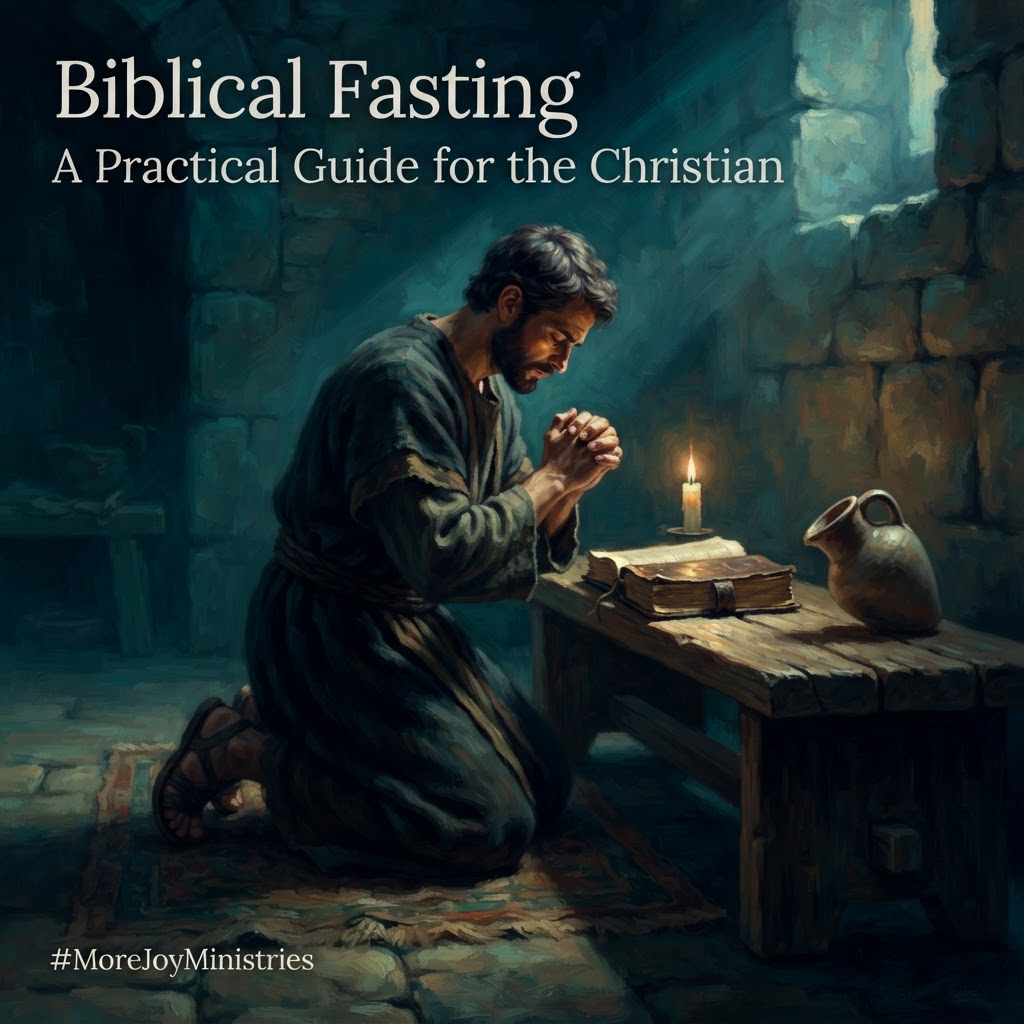
Fasting is a fundamental spiritual discipline. It involves setting aside food or other comforts for a season to sharpen your focus on God.
During this time, you devote your energy to prayer, Scripture reading, and worship. Scripture records over fifty instances of fasting across the Old and New Testaments.
Fasting has a rich history as a means of connecting with God. In the Old Testament, men like David fasted to express deep humility before the Lord as seen in Psalm 35:13.
Psalm 35:13: I put on sackcloth and humbled my soul with fasting; my prayer kept returning to my heart.
In the New Testament, fasting remains a practice of drawing near to God. Jesus Himself fasted for forty days in the wilderness to prepare for His ministry as recorded in Matthew 4:1 through 2.
Matthew 4:1 through 2: Then Jesus was led up by the Spirit into the wilderness to be tempted by the devil. And after fasting forty days and forty nights, he was hungry.
Jesus taught that fasting is a private matter. He warned against appearing somber or drawing attention to your sacrifice to gain the praise of men.
Your fast should be a quiet, intentional act between you and God. You see this combined with prayer in the early church, such as in Acts 13:3 and the faithful life of the widow in Luke 2:37.
Matthew 6:16 through 18: When you fast, do not look somber as the hypocrites do, for they disfigure their faces to show others they are fasting. Truly I tell you, they have received their reward in full.
But when you fast, let it show only to your Father, who is unseen, and your Father, who sees what is done in secret, will reward you.
Fasting opens your heart to hear God. It exposes hidden areas of sin, humbles your spirit, and helps you pray with clean motives.
It creates space to hear the quiet whispers of the Spirit, showing you the true condition of your heart. Instead of leading to shame, this insight invites you to repentance and the grace of your Savior.
Types of fasting include food, social media, entertainment, and material comforts. A food fast reminds you of your dependence on God.
A social media or television fast removes distractions that clutter your mind. Regardless of the type, the goal remains the same: a focused, undistracted heart.
If you are new to fasting, start slow. Do not rush into an extended water fast.
Begin by skipping one meal and dedicating that time to prayer. If you have health concerns, consult a doctor first.
Fasting is meant to sharpen your spirit, not harm your body.
When you end your fast, do not rush to eat a heavy meal. Reintroduce simple, healthy foods to allow your body to adjust.
Remember that the physical discomfort you feel is temporary and secondary to the spiritual work occurring in your soul.
Scripture provides examples of varying lengths, ranging from a single day to forty days. Short fasts are effective for focused prayer.
Intermittent fasts, such as one day a week, help build a consistent habit. Longer or extended fasts require more preparation and specific goals.
Regardless of the duration, your aim is always to center your life on the Lord.
Approach your fast with a plan. Define your purpose.
Replace your normal mealtime with intentional prayer or Bible study. Drink water to maintain your health.
Do not view your fast as a public performance, but as a private offering to God. When your fast concludes, reflect on what the Lord has shown you and maintain the posture of humility you developed during the process.
#MoreJoyMinistries