More Joy Ministries
Full Bible Study
Jesus changed water into wine (John 2:1 through 11)
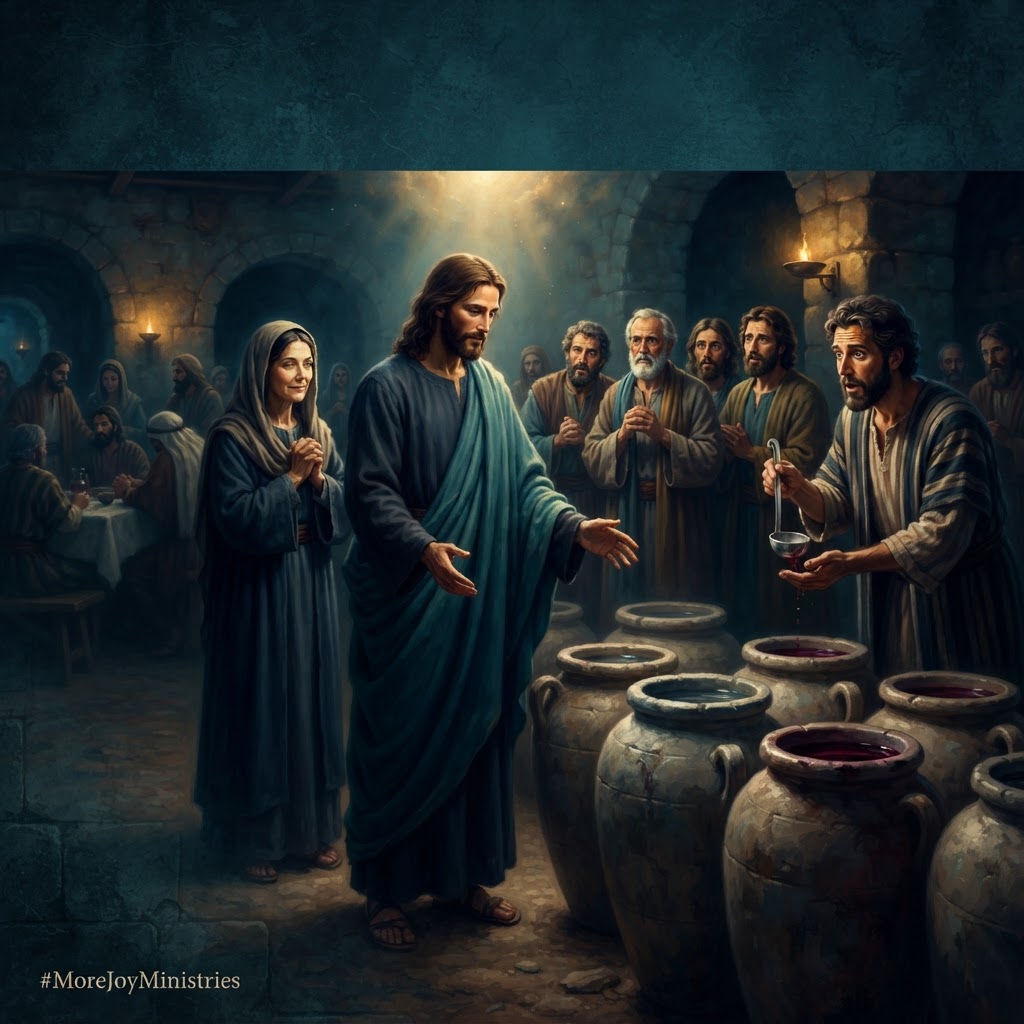
On the third day a wedding took place at Cana in Galilee. Jesus’ mother was there, and Jesus and his disciples had also been invited to the wedding. When the wine was gone, Jesus’ mother said to him, “They have no more wine.” “Woman,why do you involve me?” Jesus replied. “My hour has not yet come.” His mother said to the servants, “Do whatever he tells you.” Nearby stood six stone water jars, the kind used by the Jews for ceremonial washing, each holding from twenty to thirty gallons. Jesus said to the servants, “Fill the jars with water”; so they filled them to the brim. Then he told them, “Now draw some out and take it to the master of the banquet.”They did so, and the master of the banquet tasted the water that had been turned into wine. He did not realize where it had come from, though the servants who had drawn the water knew. Then he called the bridegroom aside and said, “Everyone brings out the choice wine first and then the cheaper wine after the guests have had too much to drink; but you have saved the best till now.” What Jesus did here in Cana of Galilee was the first of the signs through which he revealed his glory; and his disciples believed in him.
The event takes place at a wedding in the town of Cana in Galilee. Jesus, along with his disciples, is invited to the wedding. During the celebration, they ran out of wine, which was a significant social embarrassment in that cultural context. Mary, the mother of Jesus, informs him of the situation, and Jesus responds by performing his first public miracle.
In response to his mother's request, Jesus instructs the servants to fill six stone water jars with water. Each jar holds between 20 to 30 gallons. After the jars are filled, Jesus tells the servants to draw some out and take it to the master of the banquet. When the master tastes the water that has now become wine, he remarks that it is of the finest quality and wonders why the good wine was saved for later in the celebration.
The setting of this story is significant. In the Old Testament, marriage feasts symbolized the union of God with His Bride, Israel. Jesus began His ministry at Galilee, which had a large Gentile population; this was a sign of the spread of the gospel to all the world. That this wedding took place "on the third day" implies the resurrection, showing that the marriage of God and His church will be fulfilled in Christ's Resurrection.
Bible Meaning of Jesus Turning Water into Wine:
It is very desirable, when there is a marriage, to have Christ own and bless it. Those who would have Christ with them at their marriage must invite him by prayer, and he will come. While in this world, we sometimes find ourselves in straits, even when we think of ourselves in fullness. There was want at a marriage feast. Those who have come to care for the things of the world must look for trouble and count upon disappointment. In our addresses to Christ, we must humbly spread our case before him and then refer ourselves to him to do as he pleases.
In Christ's reply to his mother, there was no disrespect. He used the same word when speaking to her with affection from the cross, yet it is a standing testimony against the idolatry of after-ages in giving undue honors to his mother. His hour comes when we do not know what to do. Delays of mercy are not denials of prayer. Those who expect Christ's favor must observe his orders with ready obedience. The way of duty is the way to mercy, and Christ's methods must not be objected against.
The beginning of Moses' miracles was turning water into blood (Exodus 7:20); the beginning of Christ's miracles was turning water into wine, which may remind us of the difference between the law of Moses and the gospel of Christ. He showed that he improves creature comforts to all true believers and makes them comforts indeed. And Christ's works are all for use. Has he turned thy water into wine, given thee knowledge and grace? It is to profit withal; therefore, draw out now and use it. It was the best wine. Christ's works commend themselves even to those who do not know their Author. What was produced by miracles was always the best of its kind.
-Though Christ hereby allows a right use of wine, he does not in the least do away with his own caution, which is that our hearts be not at any time overcharged with surfeiting and drunkenness (Luke 21:34). Though we need not scruple to feast with our friends on proper occasions, yet every social interview should be so conducted, that we might invite the Redeemer to join with us if he were now on earth; and all levity, luxury, and excess offend him. (Source: Matthew Henry Commentary)