More Joy Ministries
Full Bible Study
WHAT IS BIBLICAL TYPOLOGY?
Biblical typology is when God builds a pattern into Scripture ahead of time, so something in the Old Testament points forward to something greater revealed in the New Testament.
It is not random symbolism. It is not getting creative and forcing Jesus into every shadow, rock, tent peg, and donkey in the Bible. Typology is God placing prophetic pictures in earlier revelation that later find their fulfillment in Christ and His work.
A type is a God-given foreshadowing.
That means a person, event, object, office, or system in the Old Testament can point forward to Christ or some New Testament reality. But the key is this: the connection cannot just be invented by us. Scripture has to establish the pattern.
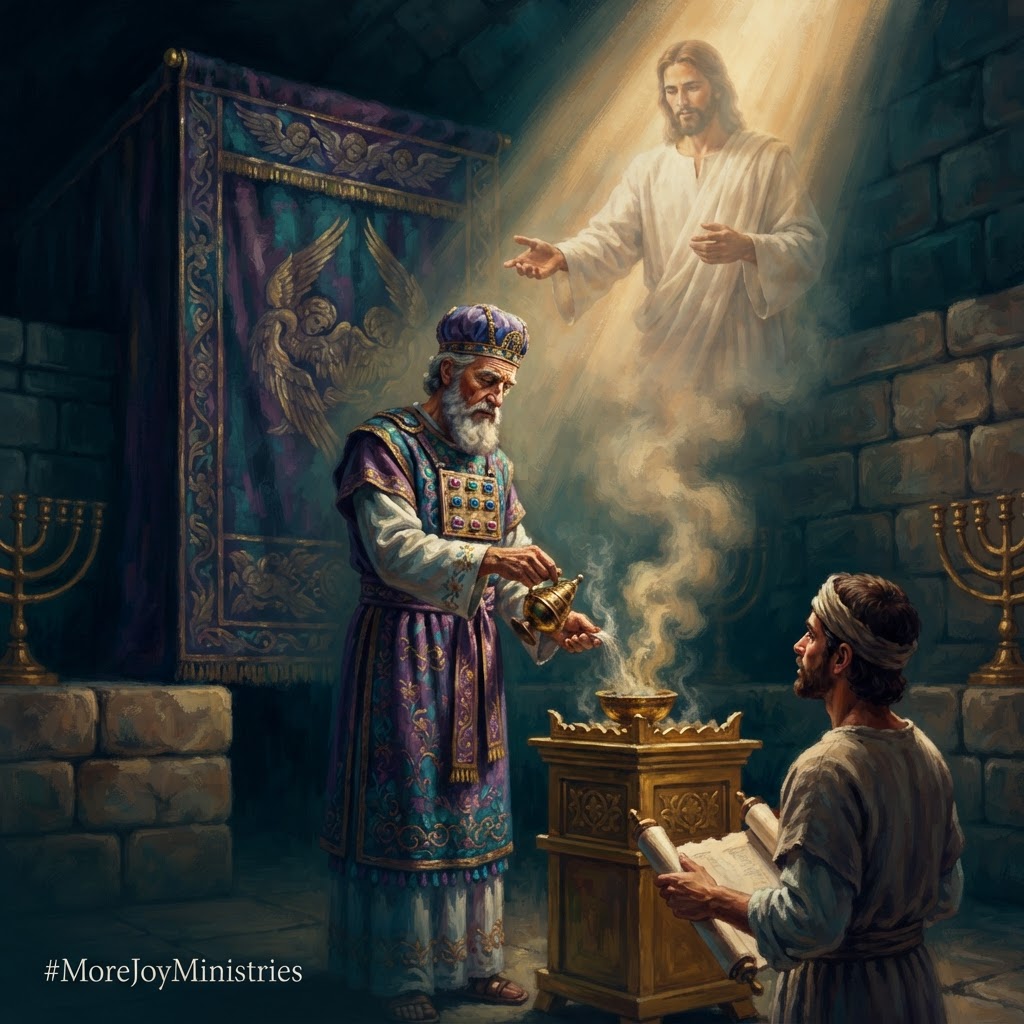
Noah’s flood is connected to baptism in 1 Peter 3:20–21. The tabernacle is called a figure in Hebrews 9. The veil is tied to Christ’s flesh in Hebrews 10:19–20. The sacrifices pointed forward to the once-for-all sacrifice of Jesus Christ. The Passover lamb pointed forward to Christ, which is why Paul says plainly, “Christ our passover is sacrificed for us” in 1 Corinthians 5:7.
That is typology.
God was preaching Christ before Christ came.
He was not just giving Israel rituals. He was building prophetic structure into history itself. The tabernacle was not just a tent. The sacrifices were not just religious ceremonies. The Passover was not just a memorial meal. They were shadows cast ahead of the substance, and the substance is Christ.
But this is where people get sloppy.
Not every parallel is a type.
A true biblical type is not just something that feels similar. It is something Scripture identifies as pointing forward. If the New Testament says an Old Testament person, event, object, or system had prophetic meaning, then you are on solid ground calling it a type. If Scripture does not say that, it is better to be careful.
Joseph is a good example. People often point to Joseph as a picture of Christ because he was rejected, humbled, and later exalted. There are real similarities there. But the New Testament never directly identifies Joseph as a type of Christ. So it is safer to call Joseph a picture or illustration, not a formal biblical type.
That distinction keeps Bible study from turning into imagination.
Biblical typology is not permission to make every detail mean whatever we want. It is the discipline of recognizing the patterns God placed in Scripture and letting Scripture govern the interpretation.
So in simple terms, biblical typology is God showing the gospel in advance.
Christ in shadow before Christ came in substance.
The Old Testament pointing forward, not by accident, but by divine design.
Once you start seeing that rightly, the Bible stops looking like a pile of disconnected stories. It is one book, one plan, one Author, and it all leads to Jesus Christ.
#MoreJoyMinistries