More Joy Ministries
Full Bible Study
ISAIAH 53 AND THE DEAD SEA SCROLLS
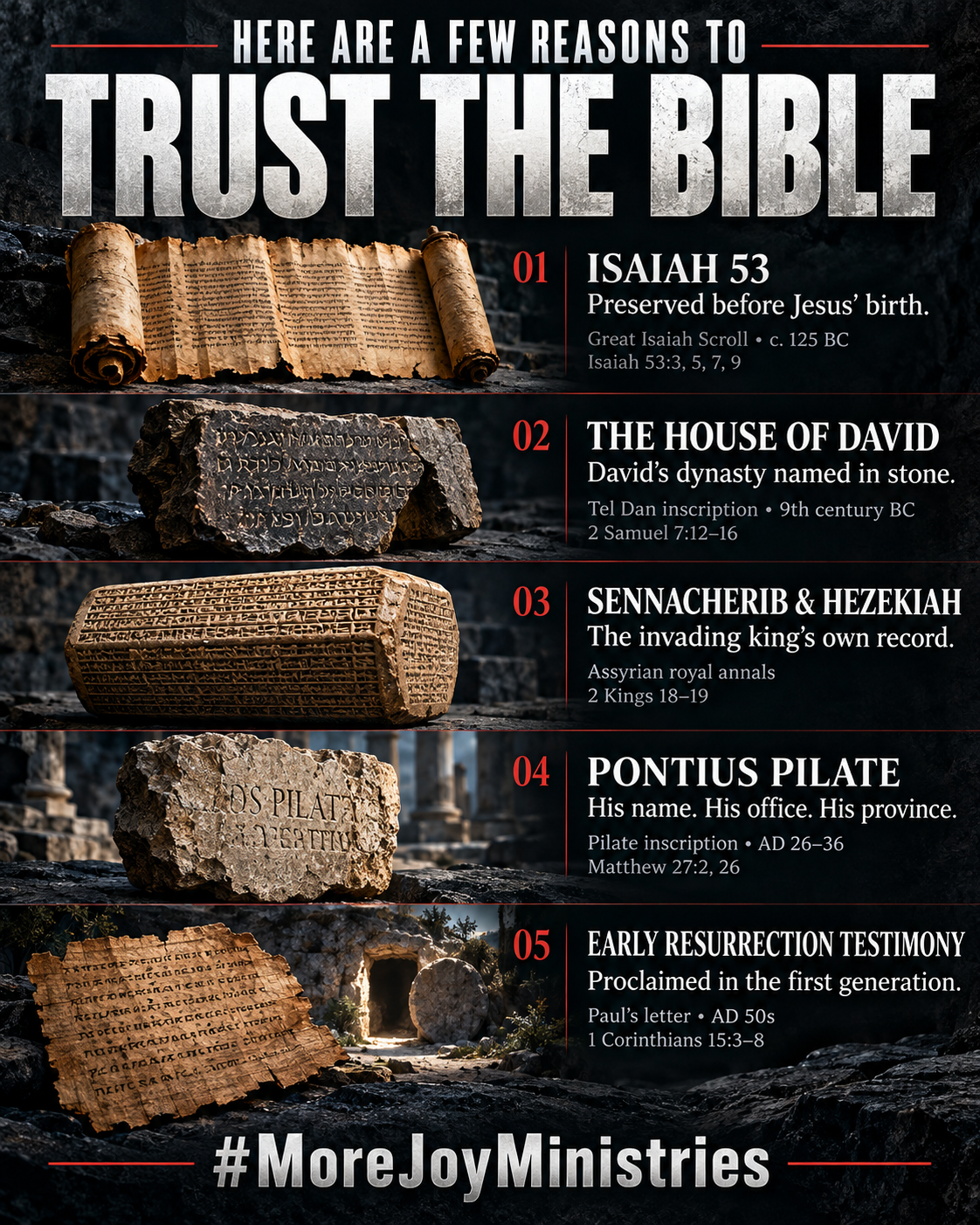
The Great Isaiah Scroll dates to approximately 125 BC and contains all 66 chapters of Isaiah. That includes Isaiah 53, giving us a physical copy of the passage from more than a century before Jesus’ birth.
The chapter describes a servant rejected by men, wounded for others’ transgressions, and brought like a lamb to slaughter. It also says he would be “with the rich in his death.” Christians understand this passage as pointing to Jesus’ suffering and burial.
Matthew records that Joseph of Arimathea, a rich man, placed Jesus’ body in his own tomb. The Dead Sea Scrolls establish that the Isaiah passage existed before the events recorded in the Gospels.
Isaiah 53:3, 5, 7, 9
Matthew 27:57 through 60
THE HOUSE OF DAVID
The first fragment of the Tel Dan inscription was discovered in 1993. This stone monument dates to the ninth century BC and contains the expression “House of David.”
The inscription commemorates an Aramean king’s military victories and refers to a king from David’s dynasty. It provides evidence outside the Bible that David’s royal house was recognized by a neighboring kingdom.
Second Samuel records God’s promise concerning David’s descendants and royal house.
2 Samuel 7:12 through 16
SENNACHERIB AND HEZEKIAH
Second Kings describes Sennacherib, king of Assyria, invading Judah during Hezekiah’s reign.
Sennacherib’s own records name Hezekiah, describe conquering forty-six fortified cities in Judah, and say he confined the king inside Jerusalem “like a bird in a cage.”
The Assyrian account independently confirms the invasion, the rulers involved, and Jerusalem’s role in the conflict. We have records of this campaign from both Judah’s Scriptures and the invading empire.
2 Kings 18 and 19
PONTIUS PILATE
A Roman inscription found at Caesarea bears Pontius Pilate’s name and identifies him as prefect of Judea. It dates from his governorship, between AD 26 and 36.
Matthew identifies Pilate as the governor who delivered Jesus to be crucified. The inscription provides contemporary evidence for the official named in the Gospel accounts, including his office and the province he governed.
Matthew 27:2, 26
THE EARLY RESURRECTION TESTIMONY
Paul wrote First Corinthians in the AD 50s, roughly twenty to twenty-five years after Jesus’ crucifixion.
In chapter 15, he passes on the account of Christ’s death, burial, resurrection, and appearances. He names Peter and James among those who saw Him. He also reports an appearance to more than five hundred people and says most were still alive when he wrote.
Paul presents this as a message he had already received and preached. His letter documents the resurrection proclamation among the first generation of Christians, including specific claims about witnesses.
1 Corinthians 15:3 through 8
#MoreJoyMinistries