More Joy Ministries
Full Bible Study
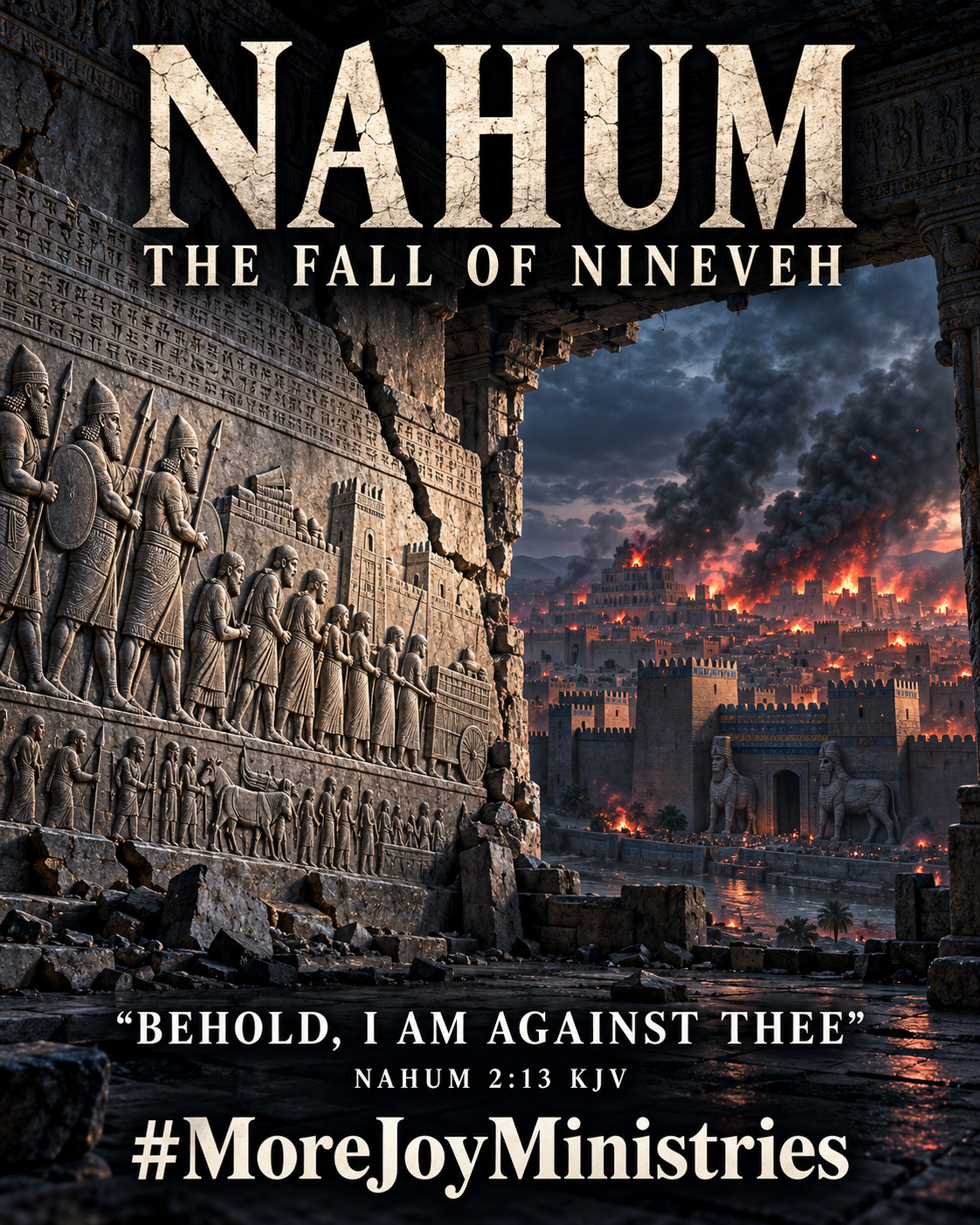
Nineveh had scenes of torture carved into its palace walls. Start there before reading Nahum.
King Sennacherib had the conquest of Lachish, a city in Judah, recorded in stone inside his palace at Nineveh. The carvings show people being marched into exile while other prisoners are tortured and executed. These reliefs survived and are now in the British Museum’s collection.
This was what the king chose to put on his walls.
Now read how Nahum addresses the city.
“Woe to the bloody city! it is all full of lies and robbery; the prey departeth not;”
Nahum 3:1 KJV.
Judah knew what Assyria was capable of. Some of the people pictured in those carvings had been taken from their own country. When Nahum announced Nineveh’s judgment, he was speaking about an empire whose victims were still living with the consequences.
There’s a detail in chapter 3 that’s easy to read right past.
“Art thou better than populous No…”
Nahum 3:8 KJV.
“No” is Thebes, the Egyptian city Assyria sacked under King Ashurbanipal in 663 BC. Nahum brings up its defenses, its waters, and its allies, then describes its people being carried into captivity.
Why bring up an Egyptian city in a prophecy against Nineveh? Because the Assyrians knew exactly what happened there. Their own army had done it.
Ashurbanipal’s inscriptions describe carrying away gold, silver, precious stones, people, and enormous quantities of plunder from Thebes. The king left a written account of what he took.
Nahum uses that victory against Nineveh’s confidence. Thebes had seemed secure too. Its wealth and defenses hadn’t saved it from Assyria. Nineveh had no reason to assume its own would save it from God.
That reference also helps place Nahum historically. Thebes had already fallen in 663 BC, while Nineveh’s destruction in 612 BC was still ahead. We’re reading a warning delivered while Nineveh was still standing.
God told the city:
“Behold, I am against thee, saith the LORD of hosts…”
Nahum 2:13 KJV.
In 612 BC, Babylonian and Median forces took Nineveh. A surviving Babylonian clay tablet records a siege lasting three months, the city’s defeat, and its wealth being carried away. The empire that had filled its palaces with other people’s possessions was being plundered itself.
Now the applause at the end of Nahum makes sense. The nations had suffered under Assyria for years. Its collapse meant the people who had terrorized them were finally losing their power.
It also helps explain this promise:
“The LORD is good, a strong hold in the day of trouble; and he knoweth them that trust in him.”
Nahum 1:7 KJV.
God promised to break Assyria’s yoke in Nahum 1:13. For Judah, His goodness included dealing with the empire that had dragged their people away.
Sennacherib had made Judah’s suffering part of his palace display. Nahum told the survivors that God had seen it too.
#MoreJoyMinistries