More Joy Ministries
Full Bible Study
WATER BAPTISM, BAPTISM WITH THE HOLY SPIRIT, AND BAPTISM WITH FIRE:
And the Misuse of Acts 2:38-
This is not a secondary debate. It touches the gospel itself. Entire traditions have been built on misunderstanding one verse. Others react so strongly against error that they downplay baptism altogether. Both extremes distort Scripture.
WHAT “BAPTISM” MEANS;
The Greek word is baptizō (βαπτίζω). It means to immerse, to submerge, to bring fully into something. It was used in common Greek for sinking a ship or dipping cloth into dye. The core idea is identification through immersion.
Biblically, baptism always carries the idea of being brought into identification with someone or something.
WATER BAPTISM:
Romans 6:3–4 describes baptism as burial with Christ and rising to walk in newness of life. It is a visible proclamation of an invisible reality. It pictures death, burial, and resurrection.
Water baptism is commanded. It is serious. It is public allegiance to Christ.
But it is not the mechanism of salvation. It does not regenerate the heart. It does not cause the Spirit to enter a person. Scripture is clear that justification is by faith. Salvation is by grace through faith. If water becomes a requirement for justification, grace is no longer grace.
BAPTISM WITH THE HOLY SPIRIT:
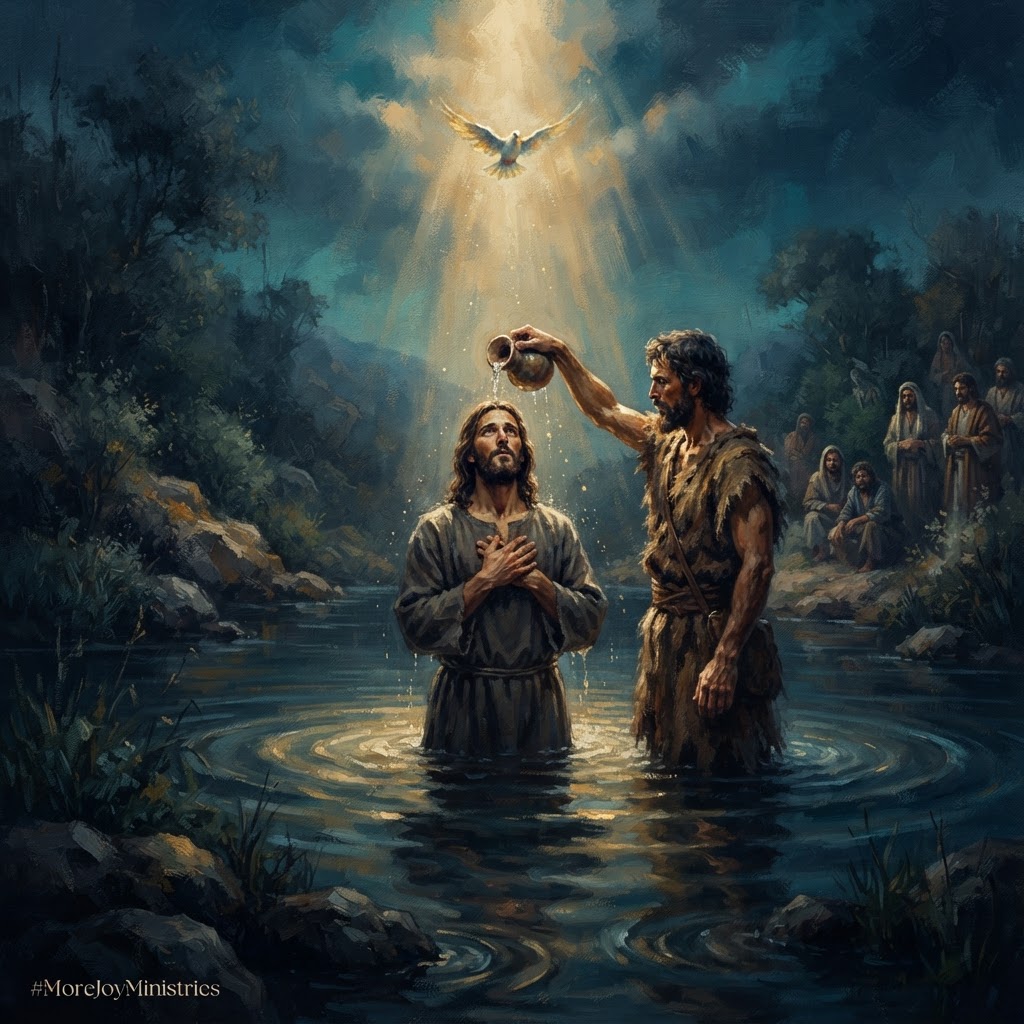
John the Baptist said the Messiah would baptize with the Holy Spirit and fire. Spirit baptism is Christ’s work, not man’s work. No pastor performs it. No water accomplishes it.
First Corinthians 12:13 says believers are baptized into one body by one Spirit. This is union with Christ. This is regeneration. This is what saves.
The inward work of the Spirit is the reality. Water is the outward testimony.
BAPTISM WITH FIRE:
This phrase is often romanticized. It is preached as revival power or a second-level anointing. But context defines meaning.
In Matthew 3, immediately after mentioning Spirit and fire, John speaks of the winnowing fork, wheat gathered into the barn, and chaff burned with unquenchable fire. The Greek word for fire is pyr (πῦρ). In that passage it is tied to judgment imagery, trees cut down, chaff burned, separation executed.
Spirit is for the repentant. Fire is for the unrepentant.
The Hebrew background reinforces this. Ruach (רוּחַ) means Spirit or breath. Esh (אֵשׁ) frequently carries judicial imagery in prophetic texts. John is announcing division under Messiah, not two stages of blessing.
ACTS 2:38:
The Greek begins with Metanoēsate; repent. It is an aorist imperative in the plural. Repentance comes first.
Then baptisthētō hekastos: let each one be baptized. That verb is singular, emphasizing personal response.
Then eis aphesin hamartiōn, for remission of sins.
Then the promise: you will receive the gift of the Holy Spirit.
Some teach that this verse proves forgiveness does not occur until water baptism takes place. That interpretation collapses under the book of Acts itself.
In Acts 10, Cornelius and his household believe and receive the Holy Spirit before they are baptized in water. The Spirit comes first. Water follows. That sequence alone proves water is not the instrument that produces salvation.
THE WORD “EIS”:
Much of the debate centers on the preposition eis. It can mean into, unto, with reference to, or in connection with. You cannot build a doctrine of salvation on a single debated preposition while ignoring Romans 5:1, which says we are justified by faith, or Ephesians 2:8-9, which says salvation is by grace through faith, or Galatians 3:2, which ties receiving the Spirit to faith rather than ritual.
Acts 2:38 describes the normal apostolic response pattern: repent, be baptized, receive the Spirit. It does not establish water as the cause of forgiveness.
HISTORICAL CONTEXT:
Immersion was already common in Jewish life through the mikveh; ritual immersion baths used during the Second Temple period. John’s baptism was not temple purification. It was repentance in preparation for Messiah.
When Peter commands baptism in Jesus’ name, he is calling a Jewish audience that had rejected Christ to publicly shift allegiance. Baptism becomes a visible confession that Jesus is Lord. It is covenantal allegiance, not sacramental magic.
THE BALANCE:
Water baptism is commanded and expected. It is not optional for obedience. But it does not save.
Spirit baptism is Christ’s work, uniting the believer to Him and bringing regeneration.
Baptism with fire in Matthew 3 is judgment language in context, not revival language.
Acts 2:38 calls for repentance first, baptism as public allegiance, and promises the Spirit to those who truly turn.
If you add water to the gospel as a requirement for justification, you alter grace.
If you remove baptism as serious obedience, you cheapen discipleship.
The gospel is too important to mishandle on either side.
- More Joy Ministries - Tony Campbell
#MoreJoyMinistries